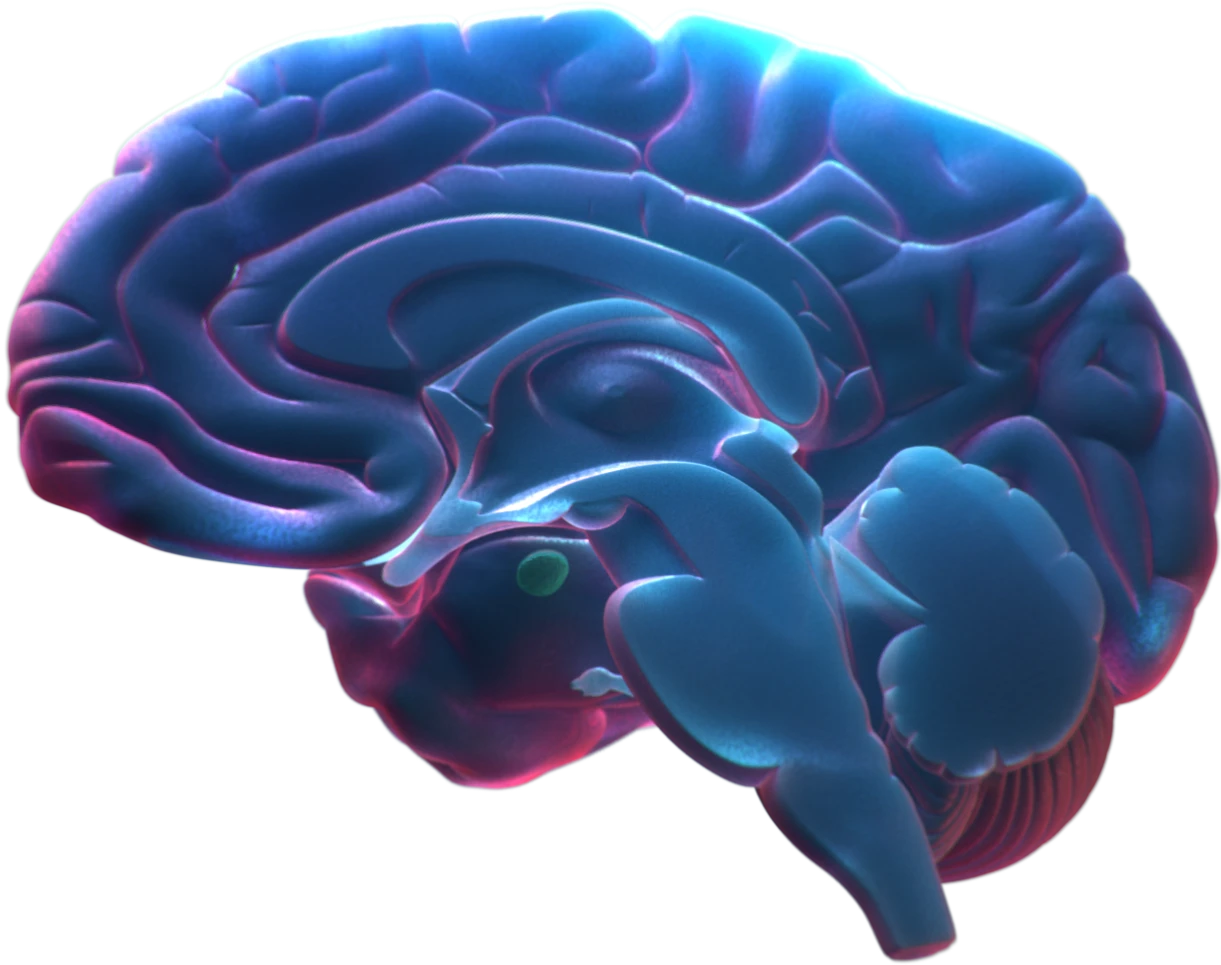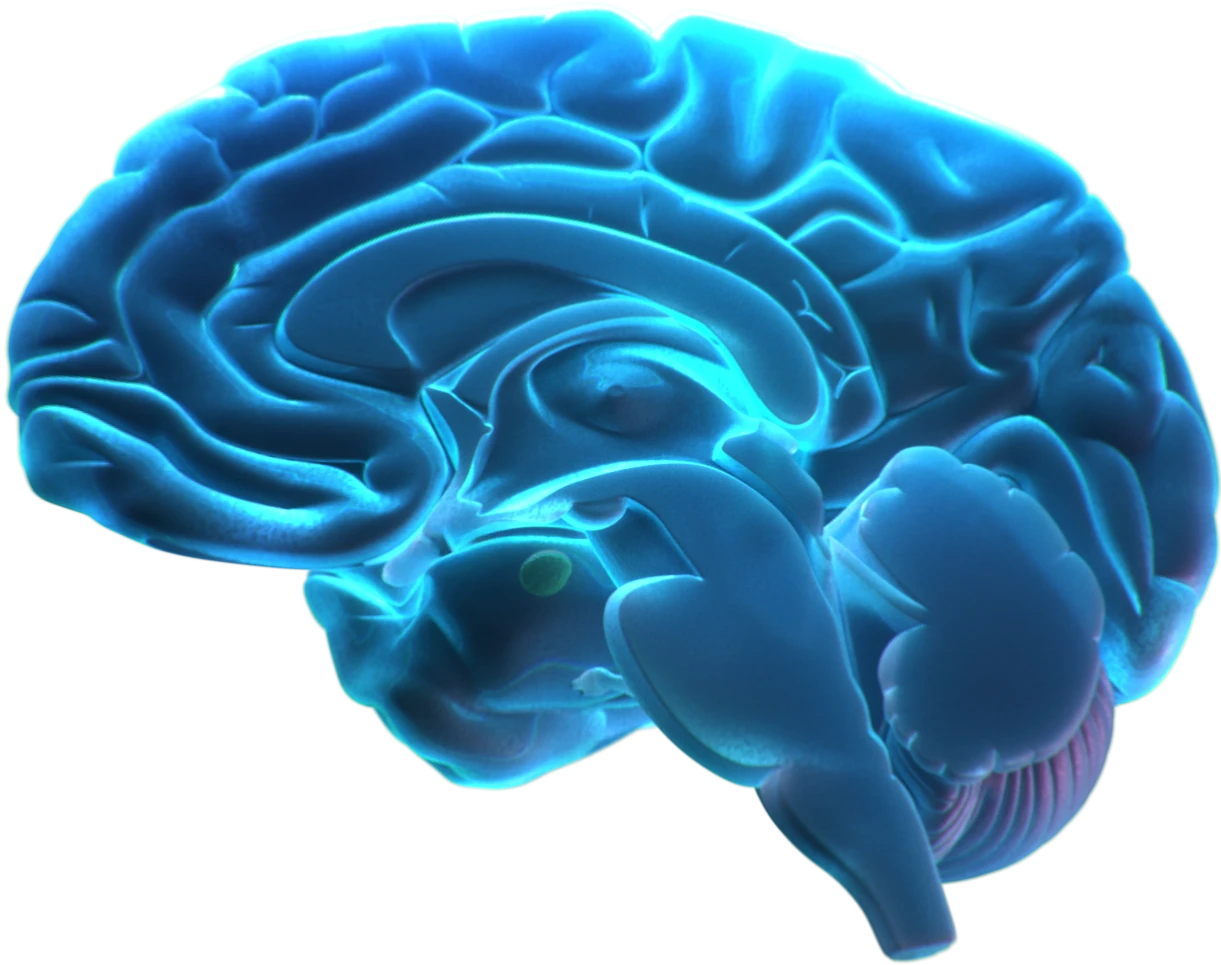



The adaptive anxiety response becomes dysregulated in GAD1

Anxiety is a healthy emotional response regulated by interconnected brain regions. In GAD, dysregulated activity across this network may contribute to symptoms.1,2 Key regions may include:

Prefrontal cortex

Disruptions in the connections between key brain regions may impair the prefrontal cortex's ability to regulate responses to stress and perceived threats. 2,5

Amygdala

Amygdala hyperactivity may bias the brain toward contextually inappropriate or excessive responses to stress or perceived threats. 2,6,7

Thalamus

Failure of the thalamus to filter incoming anxiety-related information may further contribute to dysregulated activity of other brain regions. 1,8

Neurons icon

Neurons that fire together, wire together

Neurons icon

Neurons that fire together, wire together

Neurons that fire together, wire together

Dysregulated activity and connectivity in these regions may contribute to negative thinking patterns and worry.11,12 Over time, these dysregulated connections can reinforce themselves, potentially explaining why anxiety in GAD becomes chronic.1,13,14

Register to stay updated

References

Show all
  1. Kenwood MM, Kalin NH, Barbas H. The prefrontal cortex, pathological anxiety, and anxiety disorders. Neuropsychopharmacology. 2022;47(1):260-275.
  2. Kolesar TA, Bilevicius E, Wilson AD, Kornelsen J. Systematic review and meta-analyses of neural structural and functional differences in generalized anxiety disorder and healthy controls using magnetic resonance imaging. Neuroimage Clin. 2019;24:102016.
  3. Fonzo GA, Etkin A. Affective neuroimaging in generalized anxiety disorder: an integrated review. Dialogues Clin Neurosci. 2017;19(2):169-179.
  4. Dong M, Xia L, Lu M, Li C, Xu K, Zhang L. A failed top-down control from the prefrontal cortex to the amygdala in generalized anxiety disorder: evidence from resting-state fMRI with Granger causality analysis. Neurosci Lett. 2019;707:134314.
  5. Via E, Fullana MA, Goldberg X, et al. Ventromedial prefrontal cortex activity and pathological worry in generalised anxiety disorder. Br J Psychiatry. 2018;213:437–443.
  6. Mueller SAL, Oler JA, Roseboom PH, et al. DREADD-mediated amygdala activation is sufficient to induce anxiety-like responses in young nonhuman primates. Cur Res Neurobiol. 2023;5:100111.
  7. Inman CS, Bijanki KR, Bass DI, et al. Human amygdala stimulation effects on emotion physiology and emotional experience. Neuropsychologia. 2020;145:106722.
  8. Wolff M, Morceau S, Folkard R, Martin-Cortecero J, Groh A. A thalamic bridge from sensory perception to cognition. Neurosci Biobehav Rev. 2021;222–235.
  9. Dixon ML, Thiruchselvam R, Todd R, Christoff K. Emotion and the prefrontal cortex: an integrative review. Psychol Bull. 2017;143(10):1033-1081.
  10. Fox AS, Shackman AJ. The central extended amygdala in fear and anxiety: closing the gap between mechanistic and neuroimaging research. Neurosci Lett. 2019;693:58-67.
  11. Makovac E, Meeten F, Watson DR, et al. Alterations in amygdala-prefrontal functional connectivity account for excessive worry and autonomic dysregulation in generalized anxiety disorder. Biol Psychiatry. 2016;80(10):786-795.
  12. Via E, Fullana MA, Goldberg X, Tinoco-González D, et al. Ventromedial prefrontal cortex activity and pathological worry in generalised anxiety disorder. Br J Psychiatry. 2018;213(1):437-443.
  13. Siegel JS, Liston C, Nicol GE, et al. The science of psychedelic medicine. Nat Med. 2026;32(2):449-462.
  14. Makovac E, Watson DR, Meeten F, et al. Amygdala functional connectivity as a longitudinal biomarker of symptom changes in generalized anxiety. Soc Cogn Affect Neurosci. 2016;11(11):1719-1728.